
-
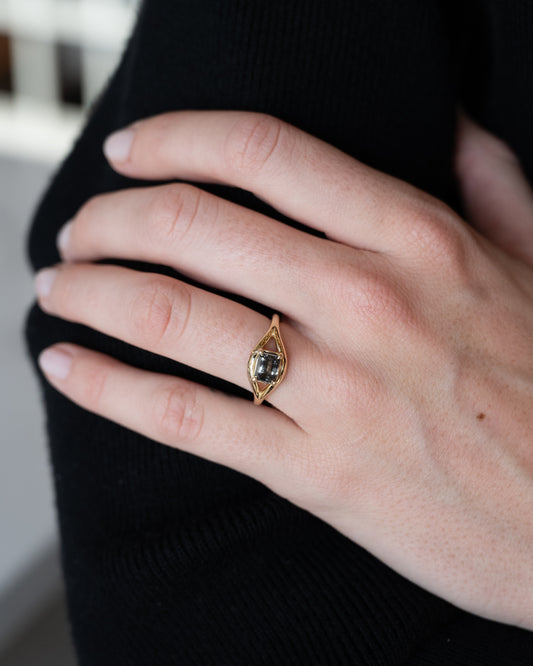
1.09 Emerald Cut Diamond Engagement Ring 14k
Regular price $4,150.00Regular priceUnit price per -
2.08 Vintage Shield Cut Diamond Engagement Ring Platinum
Regular price $6,950.00Regular priceUnit price per -
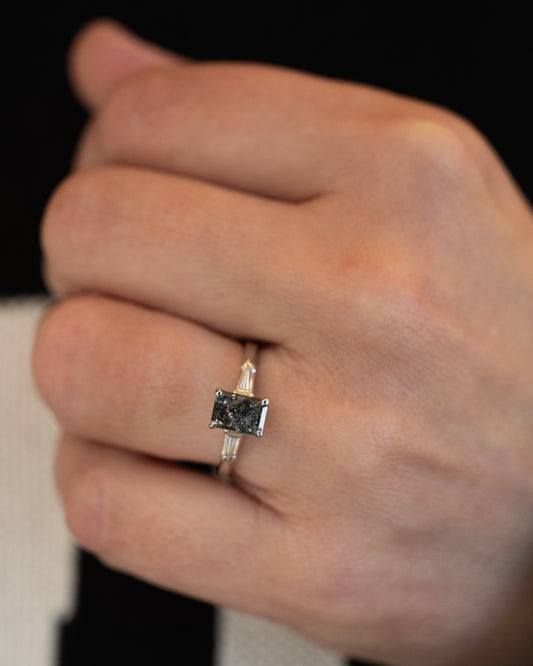
1.33 Emerald Rose Cut Diamond Engagement Ring Platinum
Regular price $4,575.00Regular priceUnit price per -
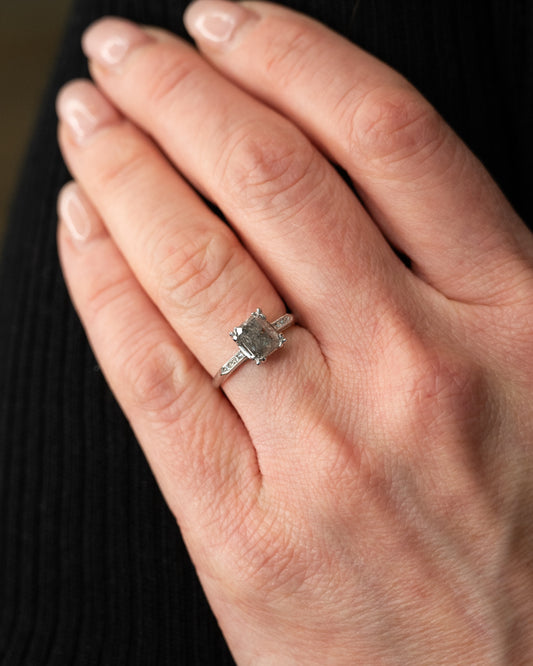
1.17 Vintage Emerald Cut Diamond Engagement Ring Platinum
Regular price $4,150.00Regular priceUnit price per -
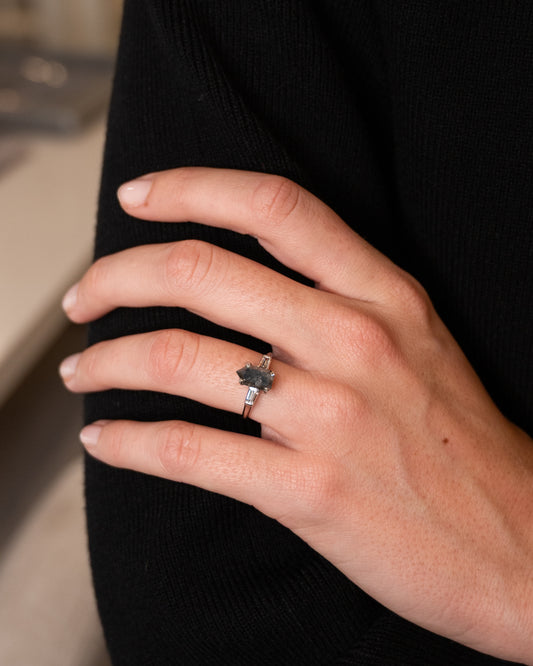
2.71 Pear Shaped Rose Cut Engagement Ring in 14k
Regular price $6,250.00Regular priceUnit price per -
1.58 Cushion Salt & Pepper Diamond Engagement Ring
Regular price $4,450.00Regular priceUnit price per






FROM THE JOURNAL
Further reading

About
Salt & Pepper Diamonds
Q: What are salt and pepper diamonds?
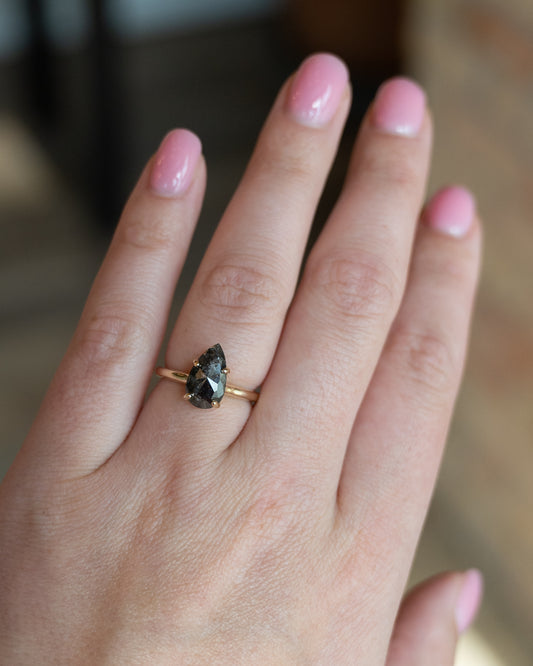
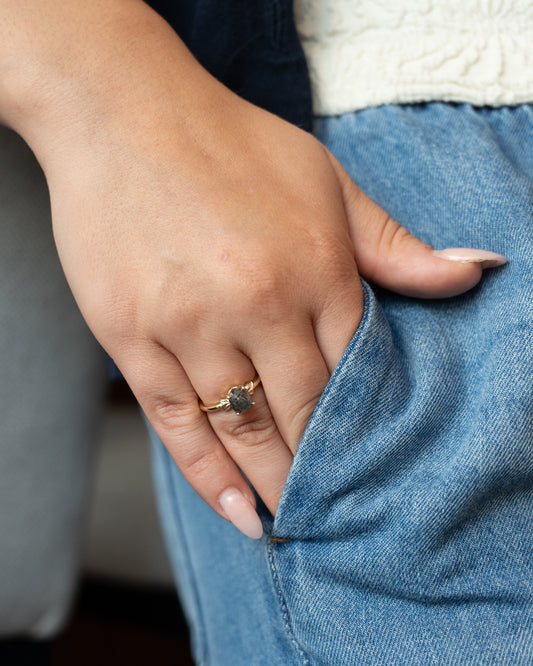
A salt and pepper diamond is a natural diamond that carries visible inclusions: black graphite and pale mineral flecks trapped in the crystal as it formed. Every natural diamond picks up someof this material while it grows. Most carry it in amounts that take magnification to find. A salt and pepper stone carries enough to see across a table, and that visibility isthe reason buyers choose one. The inclusions scatter light instead of returning it, so the stone glows and smolders rather than throwing hard flashes. The trade uses nicknames for the ends ofthe range. A galaxy diamond is dark, dense, and scattered like a night sky, while icy describes the pale, half-translucent end. Neither is a formal category, just a description ofwhereastonefalls.
Q: Why do salt and pepper diamonds not have a clarity grade?
GIA's clarity scale was built to measure how hard a trained grader has to work to find an inclusion at 10x magnification. Flawless means the search came up empty. The I gradesat the bottom mean there was no searching to do. A salt and pepper diamond lands at the bottom of that scale, and the number is accurate without being useful. It answersa question the buyer settled before she started looking. Evaluation in this category works by eye instead: the pattern the inclusions make and how it sits in the stone, the overall tone,how much light still passes through, and the quality of the cutting. Two stones with identical carat weights can behave nothing alike on those four measures, which is why we photographanddescribeeachoneindividually.
Q: Are salt and pepper diamonds durable enough for an engagement ring?
Hardness and durability are separate measurements, and the distinction matters here. Hardness is resistance to scratching, and a salt and pepper diamond sits at 10 on the Mohs scale like every otherdiamond, regardless of what is inside it. Durability is resistance to chipping under a knock. The only inclusions with any say in that are the ones that reach the surface of thestone, most often near the girdle, the thin edge where the crown meets the pavilion. An inclusion sealed inside the stone is inert. This is why bezel settings earn their keep inthis category. A continuous rim of metal wraps the entire girdle, where prongs would leave most of it exposed. Worn with ordinary care, a well-set salt and pepperdiamondhandlesdailywear.
Q: What cuts work best for salt and pepper diamonds?
Flat, open cuts show the pattern best. The rose cut, with its flat base and domed crown of triangular facets, was designed centuries before the modern brilliant and turns out to suitthese stones perfectly, since the flat base acts as a window onto the inclusions. Geometric cuts like hexagons, kites, and shields work for the same mechanical reason: wide, flat surfaces and fewfacets. Step cuts such as the emerald cut let you look down through the stone with the flecks stacked behind one another. Round brilliants do something different. Their facet pattern breaks theinclusions into texture and shimmer rather than a scene you can study, which some buyers prefer. If the pattern itselfiswhatdrawsyou,flatterisbetter.