
-
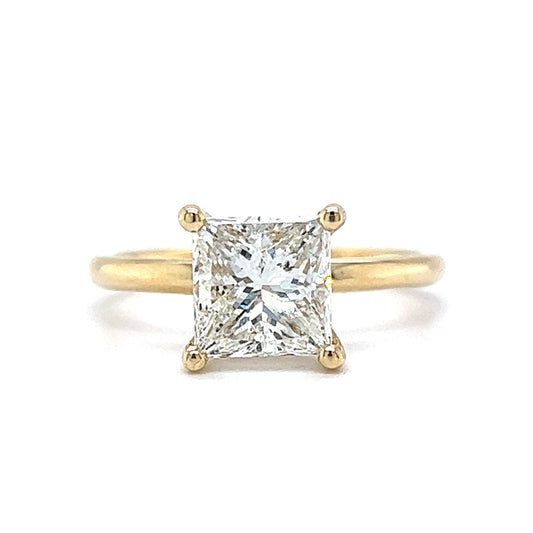
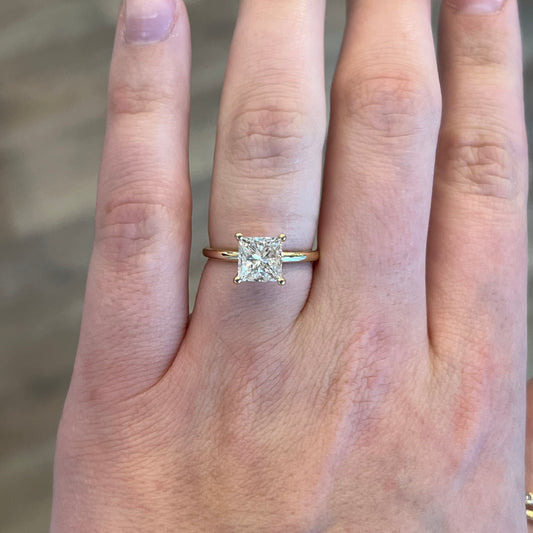
2.01 Princess Cut Diamond Engagement Ring in 14k Yellow Gold
Regular price $18,000.00Regular priceUnit price per -
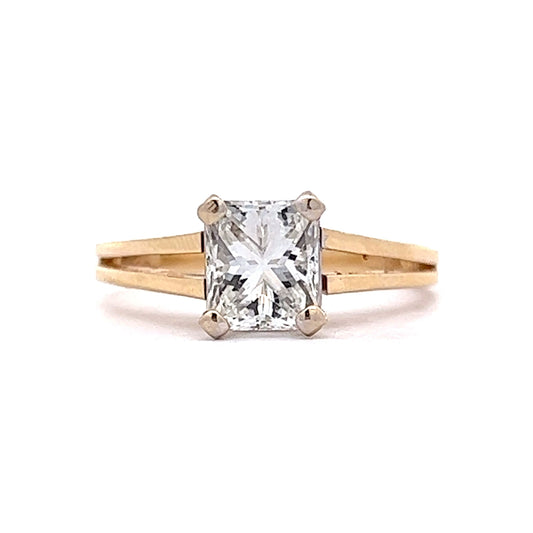
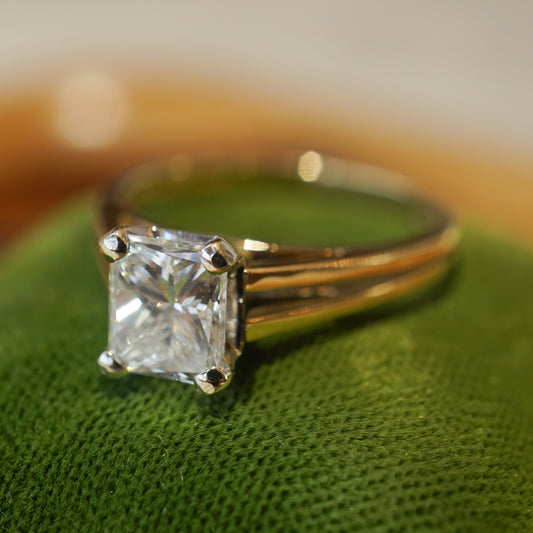
Split Shank Princess Cut Diamond Engagement Ring in 14k Yellow Gold
Regular price $6,250.00Regular priceUnit price per -
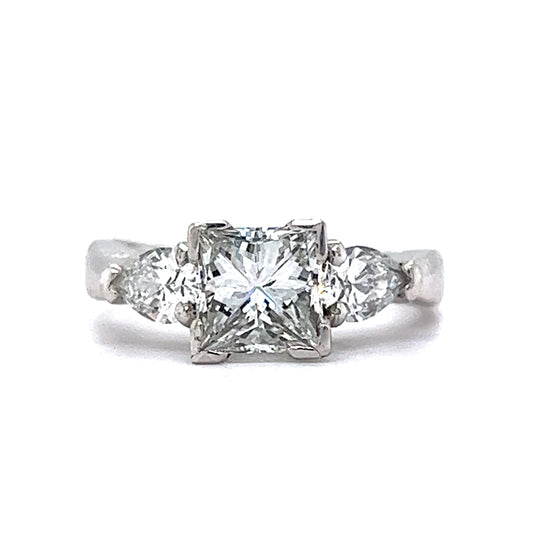
1.41 Princess Cut Diamond Engagement Ring in Platinum
Regular price $11,500.00Regular priceUnit price per
FROM THE JOURNAL
Further reading


About
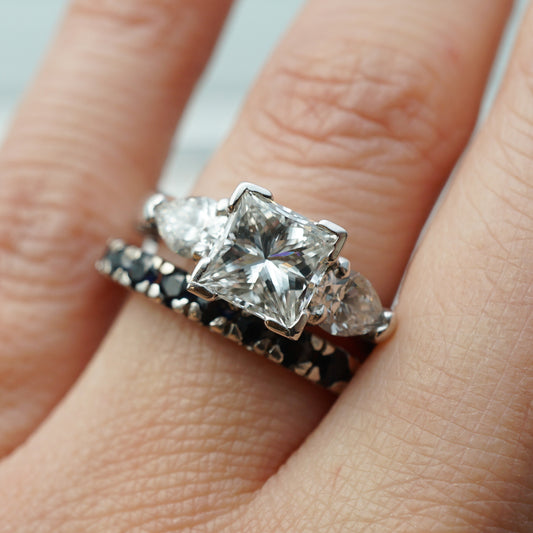
Princess Cut Engagement Rings
Q: Why are princess cut diamonds less popular than they used to be?
Buyer preferences shifted over the past decade toward elongated shapes (ovals, marquise, elongated cushions) and step cuts (emerald, Asscher). The princess cut's sharp corners and square outline fell out of fashion as the broader market moved away from the look that dominated the 1990s and 2000s. The shape itself hasn't changed; the aesthetic context around it has. For buyers who prefer maximum sparkle in a square shape, the princess cut remains the most efficient option.
Q: Are princess cut diamonds more likely to chip than other shapes?
The sharp 90-degree corners are the most vulnerable point on a princess cut. Unprotected corners can chip on impact, particularly during setting or if the ring is struck hard against a surface. Corner prongs or a full bezel setting protect the corners effectively, and once properly set, a princess cut is durable for daily wear. The risk is primarily during setting and resetting, not from normal everyday use.
Q: How does the princess cut compare to the cushion cut?
Both are square or near-square brilliant cuts, but the corner geometry and facet pattern differ. Princess cuts have sharp 90-degree corners and tend to produce more direct, uniform sparkle. Cushion cuts have rounded corners and softer faceting that creates a slightly warmer light return. Cushion cuts are more forgiving to chip at the corners. Princess cuts tend to sit slightly lower on the finger because they don't carry as much depth. Side by side, the princess looks sharper and more geometric; the cushion looks softer and more rounded.
Q: What color grade works best in a princess cut diamond?
Princess cuts show color more readily than round brilliants because the brilliant facet pattern is less effective at dispersing color than in a round. G or H color is generally the threshold for a face-up white appearance in white metal settings. In yellow or rose gold, H through J tends to look clean because the warm metal offsets the diamond's warmth. The corners of a princess cut can also concentrate color slightly, so staying at G or above is safer if color is a priority.