
-
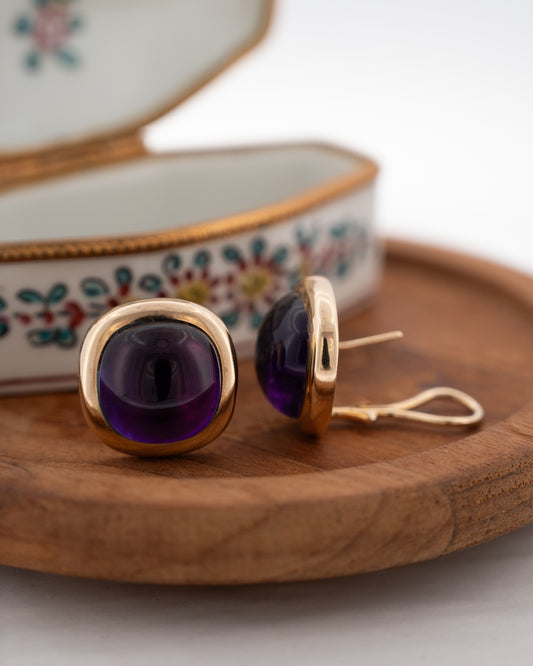
30.00 Amethyst Cabochon Stud Earrings 14K Yellow Gold
Regular price $2,800.00Regular priceUnit price per -
.11 Flush Set Amethyst Stacking Ring 14k Yellow Gold
Regular price $895.00Regular priceUnit price per -
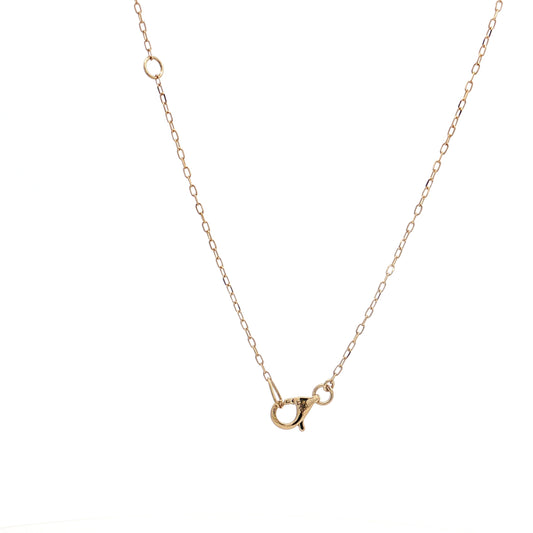
1.04 Emerald Cut Amethyst Pendant Necklace 14k Rose Gold
Regular price $1,300.00Regular priceUnit price per -
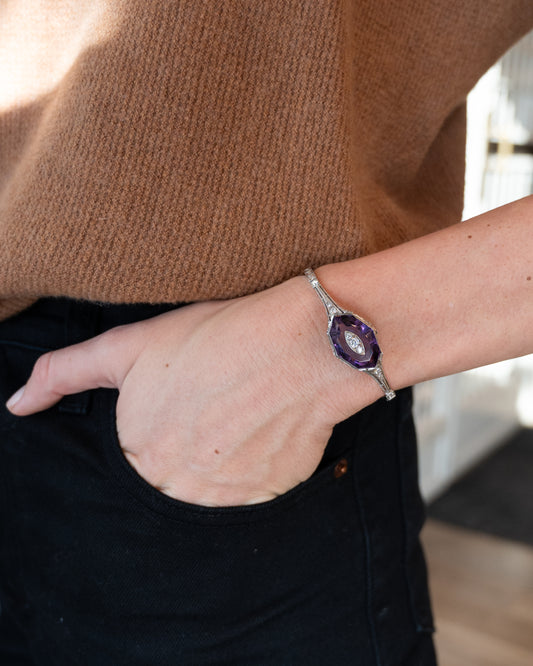
14.91 Vintage Deco Amethyst & Diamond Bracelet 14k
Regular price $3,950.00Regular priceUnit price per -
9.40 H. Stern Amethyst Convertible Hoop Earrings 18k
Regular price $3,600.00Regular priceUnit price per -
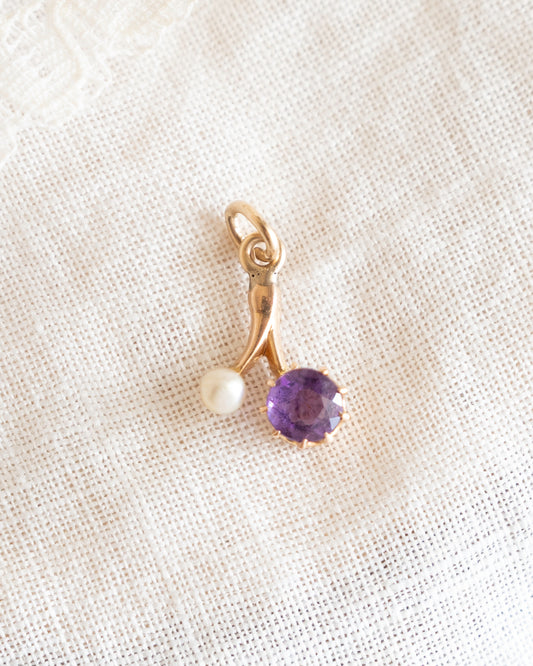
.26 Vintage 1960s Amethyst Birthstone Charm 14k
Regular price $195.00Regular priceUnit price per -
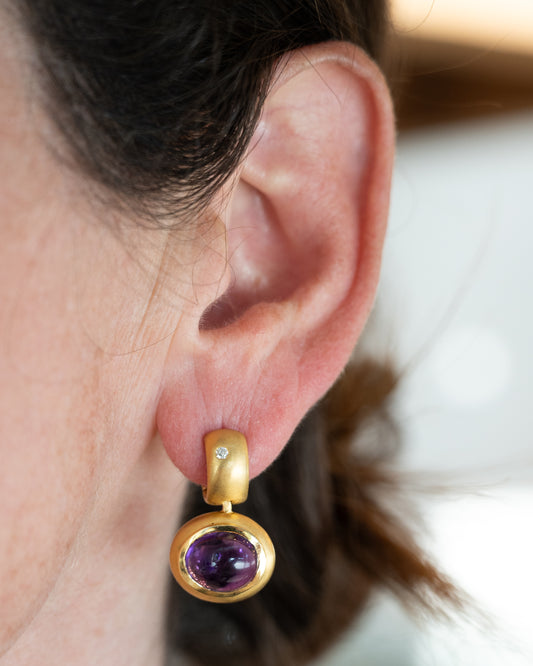
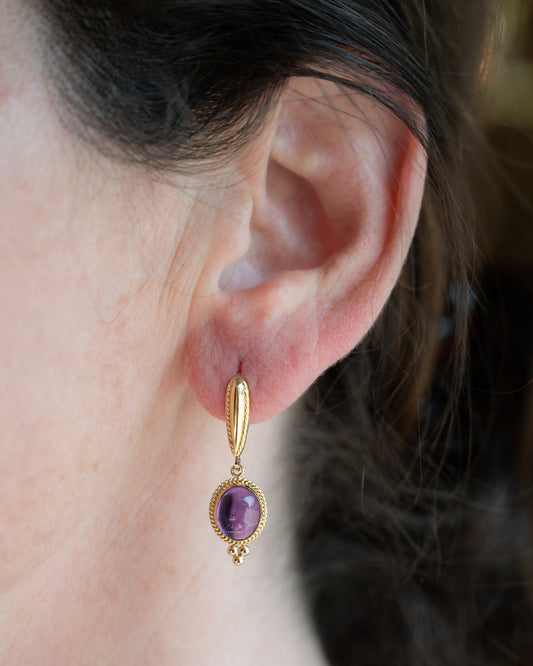
5.20 Cabochon Amethyst Drop Earrings in 14k Yellow Gold
Regular price $775.00Regular priceUnit price per -
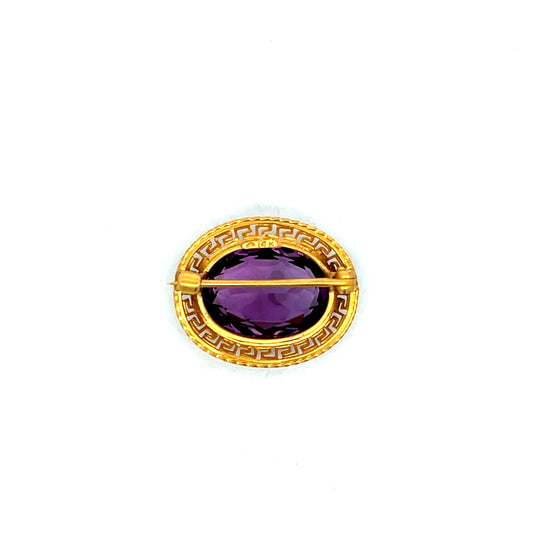
7.44 Vintage Victorian Amethyst Brooch in 14k
Regular price $1,100.00Regular priceUnit price per -
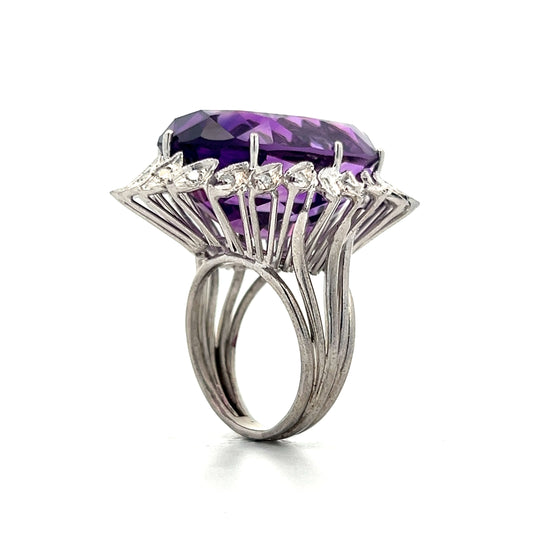
27.97 Amethyst & Diamond Cocktail Ring in 14k
Regular price $3,900.00Regular priceUnit price per









FROM THE JOURNAL
Further reading

About
Amethyst Jewelry
Q: What is the birthstone for February?
Amethyst is February's birthstone, the purple variety of quartz, colored by traces of iron and natural irradiation in the crystal. Its name comes from the Greek amethystos, meaning not intoxicated; the ancients believed the stone guarded its wearer against drunkenness, and wine goblets were carved from it on that logic. For most of recorded history amethyst ranked among the cardinal gems alongside ruby, emerald, sapphire, and diamond, reserved for royalty and the church. That long association with the color of rank is still what the stone carries into a jewelry box today: a purple with real history behind it, available in everything from pale lilac to a saturated violet with flashes of red.
Q: What color should I look for in an amethyst?
Amethyst runs from the palest lavender to a purple so deep it approaches black under poor light. The historically prized tone, once called Siberian in the trade, is a rich, saturated purple that flashes red and blue as the stone moves. At the other end sits Rose de France, a soft, silvery lilac that had a devoted following in Edwardian and mid-century jewelry and reads beautifully in daylight. Neither is more correct; they are different stones in temperament. Look for evenness above all: fine amethyst holds its color across the whole stone rather than showing pale zones or banding face-up. Because amethyst darkens visually in small sizes and washes out in dim light, the setting and intended wear matter as much as the raw color.
Q: How can I tell if an amethyst is genuine?
Synthetic amethyst has been grown in laboratories since the twentieth century and is chemically the same quartz, which makes separation a genuine gemological task rather than a glance. Natural stones tend to show subtle color zoning, angular bands of stronger and weaker purple laid down as the crystal grew, along with characteristic inclusions; synthetics are often suspiciously flawless and evenly colored. Under magnification a gemologist looks for growth features and twinning patterns that natural quartz displays and most synthetics do not. Glass imitations, common in costume pieces, are easier to unmask by their bubbles and single-toned color. The stones in our pieces are verified as part of intake, and we are happy to walk through how a particular amethyst declares itself natural.
Q: Is amethyst durable enough for everyday wear?
Quartz measures 7 on the Mohs scale, the traditional dividing line between stones that shrug off household dust, which contains quartz grit, and stones that slowly dull from it. That makes amethyst genuinely wearable: earrings, pendants, and brooches need no special thought, and rings hold up well with ordinary awareness, removed for rough work. The one habit specific to amethyst is light: prolonged, repeated exposure to strong direct sunlight can slowly soften the purple over years. A stone worn through normal days is in no danger; one left on a sunny windowsill for a season is. Store it in the box, not the window, and an amethyst will hold the color it was cut with indefinitely.