
-
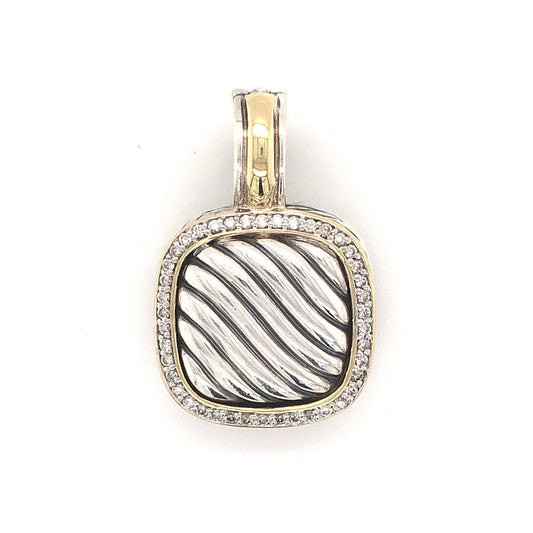
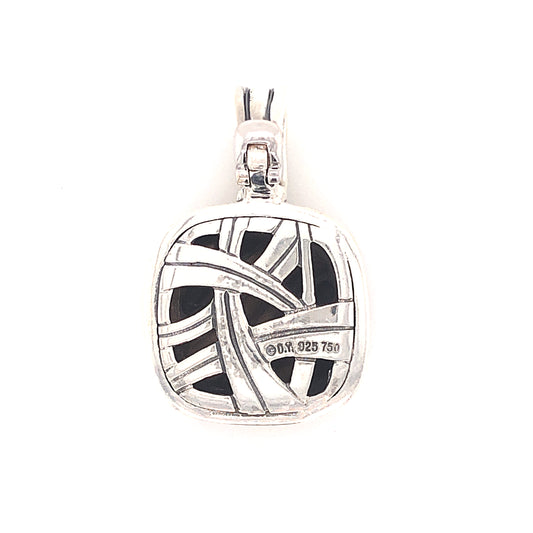
Yurman Diamond Pendant in Sterling Silver & 18K Yellow Gold
Regular price $850.00Regular priceUnit price per$1,100.00Sale price $850.00Sale -
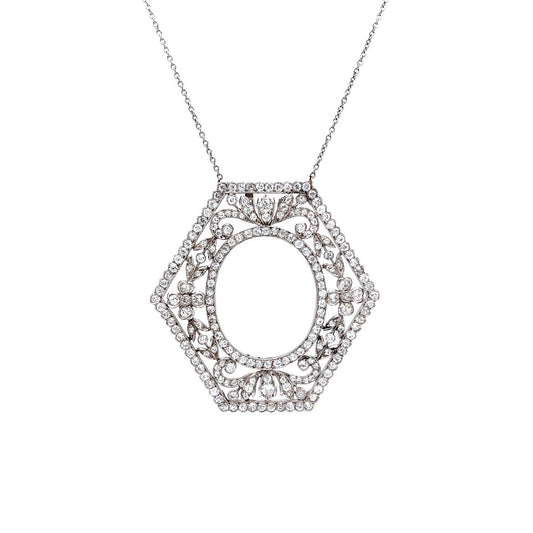
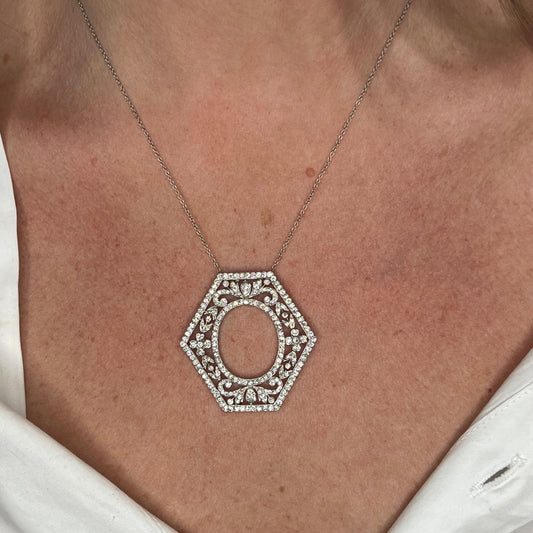
5.00 Carat Antique Art Deco Diamond Necklace in Platinum
Regular price $6,800.00Regular priceUnit price per$8,500.00Sale price $6,800.00Sale
About
Diamond Necklaces
Q: What is the difference between a tennis necklace and a station necklace?
A tennis necklace sets diamonds continuously from one end of the chain to the other, creating an unbroken line of stones. A station necklace spaces diamonds at regular intervals along the chain, with plain metal links between them. Tennis necklaces have more visual impact and more weight. Station necklaces are lighter, more understated, and generally easier to layer with other pieces because they leave negative space along the chain.
Q: What diamond quality should I look for in a necklace?
The visual priorities are different than for rings. Color is less noticeable at necklace distance, so diamonds in the G to I range often face up white in a pendant or tennis necklace even though the same stone might show a hint of warmth in a ring. Clarity inclusions are also harder to see at chest level, so VS2 or SI1 stones that are eye-clean work well. Cut quality matters the most in a necklace because it determines how well the stone catches and returns light when it moves against your body. For multi-stone pieces like tennis necklaces, consistency of color and size across all the stones matters more than the grade of any individual diamond.
Q: What length diamond necklace is most versatile?
An 18-inch chain hits just below the collarbone on most people and works with the widest range of necklines. It sits high enough to be visible above a crew neck but low enough to complement a V-neck or open collar. For layering, 16-inch and 20-inch pieces on either side of an 18-inch anchor create the most balanced spacing. Choker lengths (14 to 16 inches) work well for formal or evening wear but can feel restrictive for daily use. Opera lengths (28 to 30 inches) are statement pieces that work best on their own or as the longest layer in a stack.
Q: Can diamond necklaces be worn every day?
Yes. Diamonds are the hardest natural material (10 on the Mohs scale) and gold and platinum are durable metals, so a well-made diamond necklace can handle daily wear without issue. The main maintenance considerations are the clasp and the settings. Lobster clasps are the most secure for daily wear. Spring ring clasps are lighter but can weaken over time. For pave or multi-stone pieces, periodic inspection of the settings (once or twice a year) catches any stones that may have loosened before they fall out. Remove diamond necklaces before swimming in chlorinated water, which can damage the metal over time.
Q: What is the difference between a bezel setting and a prong setting on a diamond pendant?
A bezel setting wraps a thin band of metal completely around the circumference of the diamond, holding it in place. A prong setting uses individual metal posts (usually four or six) to grip the diamond at its edges, leaving more of the stone exposed. Bezel settings are more protective, less likely to snag on clothing, and give the pendant a sleeker profile. Prong settings allow more light to enter the diamond from the sides, which can increase brilliance and sparkle. Both are durable for daily wear. The choice is primarily aesthetic.