
-
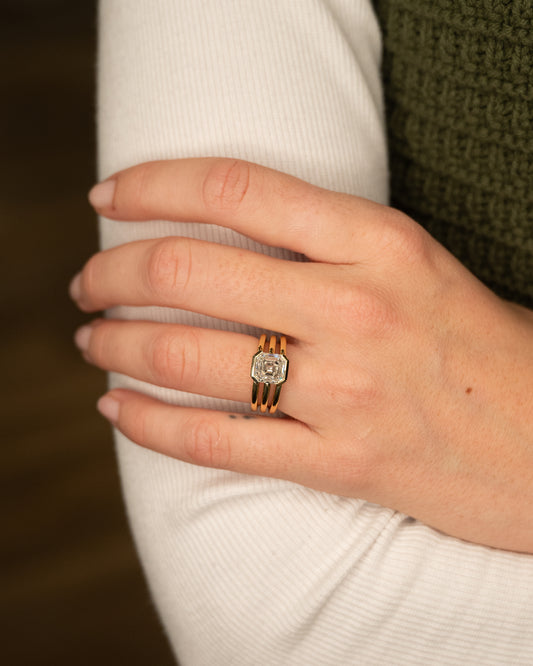
3.03 GIA Asscher Diamond Engagement Ring 18k
Regular price $26,750.00Regular priceUnit price per -
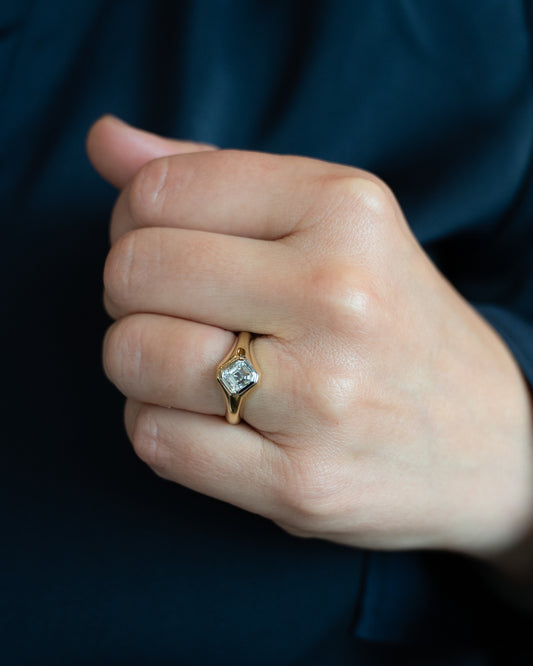
.90 Asscher Diamond Two-Tone Engagement Ring in 18k
Regular price $5,900.00Regular priceUnit price per -
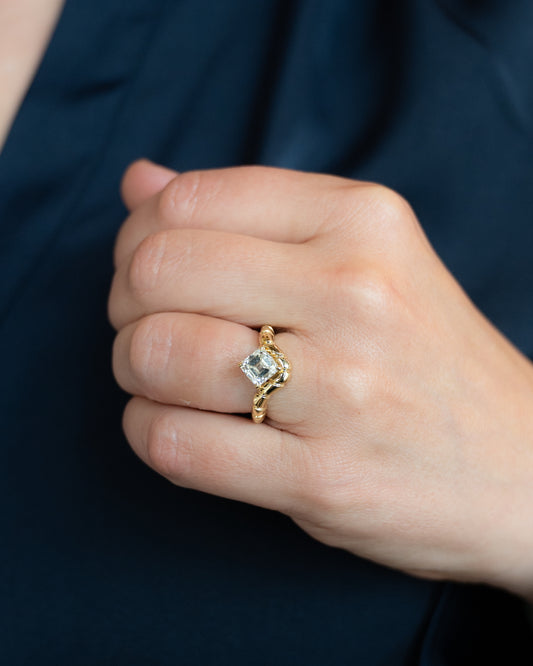
1.71 Asscher Diamond Solitaire Engagement Ring in 18k
Regular price $11,500.00Regular priceUnit price per -
2.75 Asscher Cut Diamond Engagement Ring in 18k
Regular price $16,750.00Regular priceUnit price per -
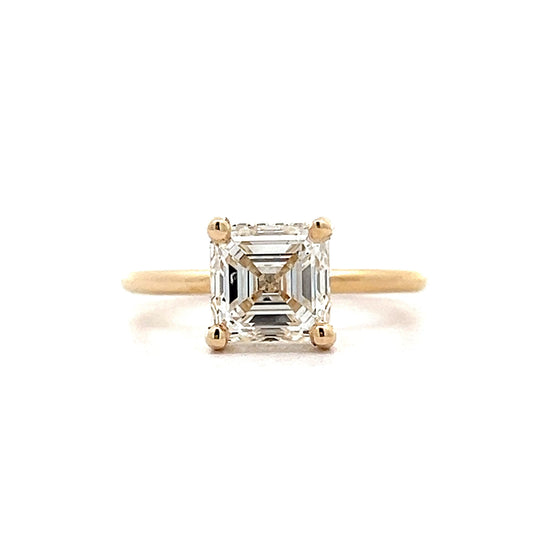
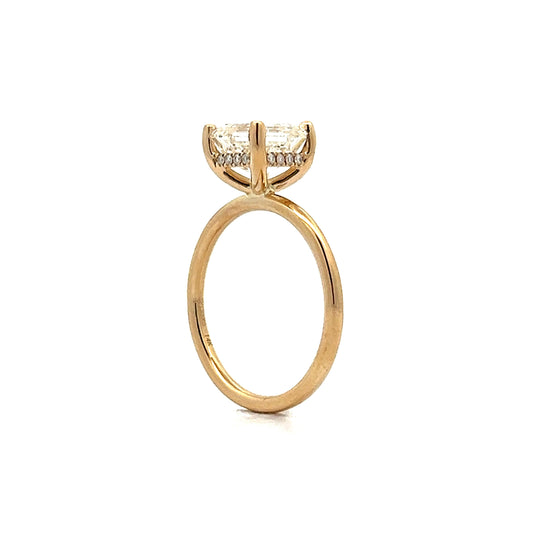
2 Carat Asscher Cut Engagement Ring in 14k Yellow Gold
Regular price $12,650.00Regular priceUnit price per -
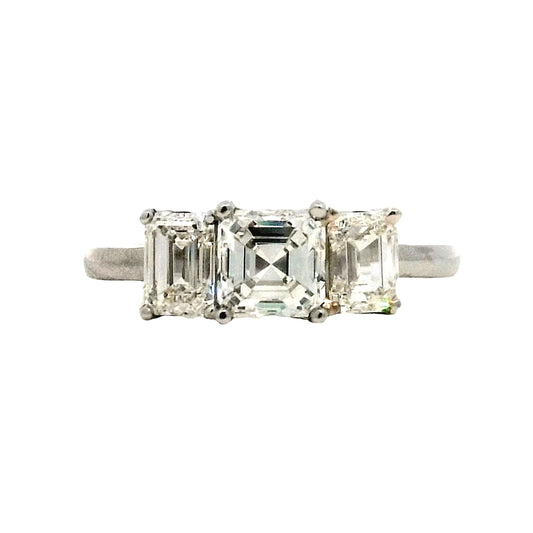
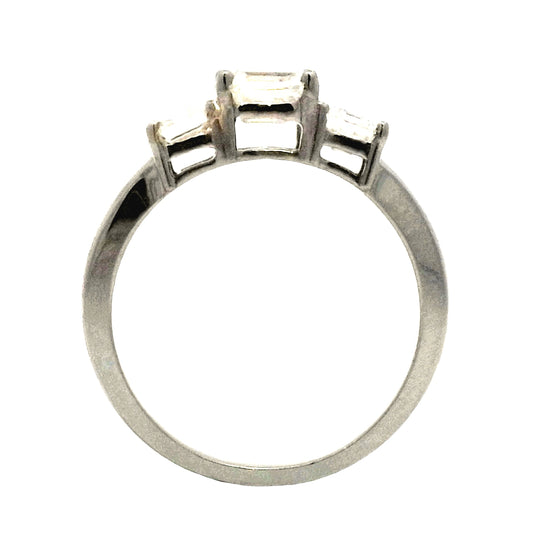
1.00 Carat Asscher Diamond Engagement Ring in Platinum
Regular price $8,750.00Regular priceUnit price per




About
Asscher Cut Engagement Rings
Q: What is the difference between an Asscher cut and an emerald cut?
Both are step cuts with the same parallel facet structure and hall-of-mirrors light behavior. The difference is the outline: emerald cuts are rectangular, Asscher cuts are square with cropped corners that give them an octagonal appearance. Asscher cuts also tend to have a higher crown and more depth, which intensifies the hall-of-mirrors effect. The choice between them is primarily about whether you prefer a square or rectangular shape on the finger.
Q: What clarity grade do I need for an Asscher cut diamond?
VS2 is the practical minimum for an eye-clean Asscher. The large open facets make inclusions more visible than in brilliant cuts, so clarity matters more here than in rounds or ovals. Location of inclusions within the stone is equally important: an inclusion near the edge may be hidden under a prong, while the same inclusion near the center of the table will be obvious. Review the GIA plot and compare it to the actual stone before purchasing.
Q: Are original Asscher cuts different from modern ones?
Yes. The original 1902 Asscher cut has 58 facets, a high crown, a small table, and an open culet. The modern Royal Asscher cut, redesigned in 2001, has 74 facets and produces more brilliance and symmetry. Antique original Asschers are rarer and appear primarily in estate pieces. Both produce the hall-of-mirrors effect, but the original has more depth and visual intensity, while the modern version is brighter and more uniform.
Q: What setting styles work best with Asscher cut diamonds?
Solitaire settings showcase the geometric outline without distraction. Four-prong settings with prongs at the corners of the octagonal outline are the most common configuration. Halo settings add a frame of smaller diamonds that emphasizes the octagonal shape. Art Deco-style settings with milgrain edging and geometric metalwork complement the Asscher's architectural character particularly well. Avoid settings with decorative metalwork that obscures the clean lines of the stone.